
 Refrigerated Deliveries in Rome, Tuesday and Friday, Free for orders over €35
Shipping EUROPE in 24/48H, from €7,90 upwards, Refrigerated +€8,5
A Benedictine community that cultivates the Maremma Toscana according to the principles of organic farming.
On a hill above the Ombrone valley, where working the land is part of the rule
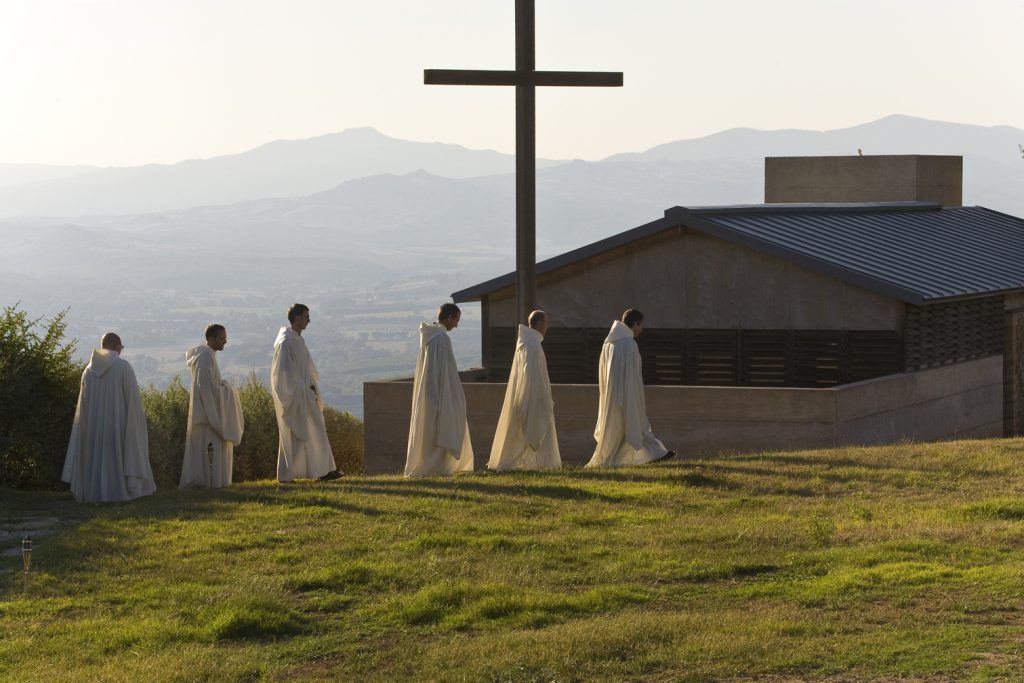
Some places speak for themselves. The Monastery of Siloe sits on a hill overlooking the Ombrone Valley, with Mount Amiata and the Val d'Orcia nearby, and, on the horizon, the Uccellina Mountains, behind which the sun dips into the sea in golden sunsets. We are in Tuscany, in the province of Grosseto, one kilometer from Poggi del Sasso and ten from Paganico. A community of monks lives and works here, following the Benedictine tradition, recognized on December 18, 1997, by the Bishop of Grosseto, Monsignor Giacomo Babini. The monastery is still under construction, but is already capable of welcoming friends, guests, and pilgrims.
In the Benedictine tradition, work is not an accessory to spiritual life: it is an integral part of it. For fifteen hundred years, European monasteries have been places of cultivation, agricultural experimentation, and the preservation of seeds and knowledge—and it is no coincidence that many ancient varieties have survived within the cloister walls. At Siloe, this legacy lives on: on the land surrounding the monastery, the community cultivates the land according to the principles of organic farming, respecting the rhythms of nature and the fertility of the soil. This method allows only the use of natural substances and excludes synthetic fertilizers, herbicides, and insecticides. Working the land patiently, without forcing it, is a choice that precedes any commercial considerations.
Biodiversity is the richness, variety, and coexistence of many forms of animal and plant life—and that's exactly what globalization and intensive cultivation techniques have damaged, often irreparably. The community's response is concrete and measured in seeds: durum wheat Triticum turanicum, very ancient, originating from the regions of Mesopotamia; farro, the basis of the diet of the ancient Romans and marginalized by an agriculture that prefers quantity to quality;olive in the typical cultivars of the Maremma, Frantoiano, Leccino and Moraiolo; Ciliegiolo, a native vine that was once the most widespread in these places and was then replaced by better known varieties; black chickpea, an ancient, almost extinct legume that poorer families used as a substitute for meat; saffron, typical of some areas of the Maremma; and fourteen varieties of chili pepperSome indigenous, others from around the world and recovered here. They're not just crops: they're the memory and identity of a region.
The way a field is worked says everything about how it is treated. At Siloe, crops rotate over time on the same plot, because different species release different nutrients into the soil, each preparing the nutrients for the next: this is crop rotation, an ancient technique that both ensures biodiversity and regenerates fertility. Fertilization occurs exclusively with organic matter, animal manure spread across the fields, or with green manure: alfalfa, clover, and legumes sown in the fall and buried in the spring, which, once turned into the soil, keep microorganisms alive and enrich the soil with nitrogen. Added to this is the commitment to not overexploit the soil, water, and air, using them respectfully to the natural characteristics of the site. In short, the soil is not an inert medium to be squeezed: it is an organism to be nourished.
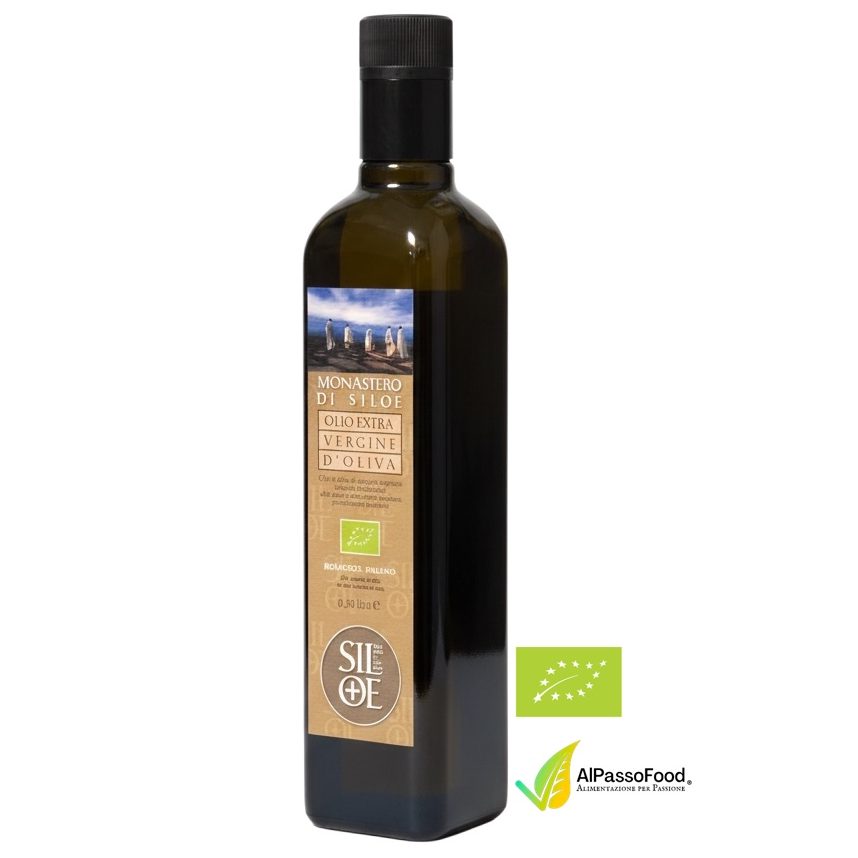
What grows in the monastery's fields is transformed with the same care with which it was cultivated. From the vineyards comes the DOC Maremma Toscana Ciliegiolo wine; from the olive groves theextra virgin olive oilFrom the fields come the cereals — barley, emmer wheat and durum wheat Triticum turanicum — which become artisanal pasta made from barley, spelt and ancient grains; legumes, with black chickpeas and lentils; tomatoes, transformed into fresh sauces. And then the two most valuable productions in terms of weight and work: the ground chili pepper and pure saffron in stigmas, picked flower by flower. All grown using natural methods and handcrafted to preserve the authentic flavor and nutritional value of the Maremma's raw materials.
There's a profound connection between monastic life and well-executed agriculture: both require perseverance, moderation, and the ability to wait. Neither allows for shortcuts, because a bad planting pays the price a year later, and impoverished soil doesn't regenerate in a single season. Perhaps this is why the food that comes from a monastery is different: it doesn't come from a rush to get to market, but from the daily discipline of those who do things the way they should be done. At Al Passo Food, you'll find the products of Monastery of Siloam: the Tuscan Maremma cultivated with the attention it deserves.
Follow us on Instagram for lots of news: @alpassofood
We answer all your questions about WhatsApp